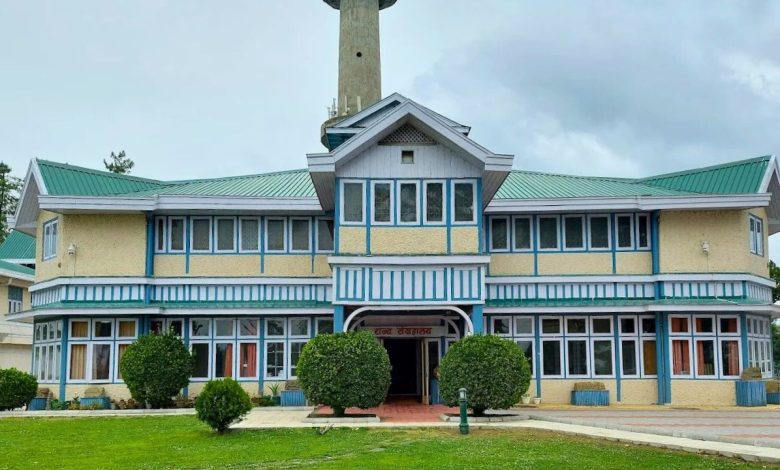
The Himachal State Museum is located on Inverarm Hill, above the Chaura Maidan at Shimla. It’s a colonial building with a stunning Victorian-style architecture, built in 1860. The Himachal State Museum is one of the most prominent cultural centers in the state.
Inside, the museum holds stone sculptures, miniature Pahari paintings, coins, manuscripts, traditional costumes, and photographs. It also displays archaeological findings that trace the rich history of Himachal Pradesh from ancient to modern times.
The highlight is the collection of Kangra paintings, known for their fine detailing and storytelling based on love tales and mythological themes. The museum also has a library with rare books and historical documents.
Table of Contents
Himachal State Museum – History and Purpose
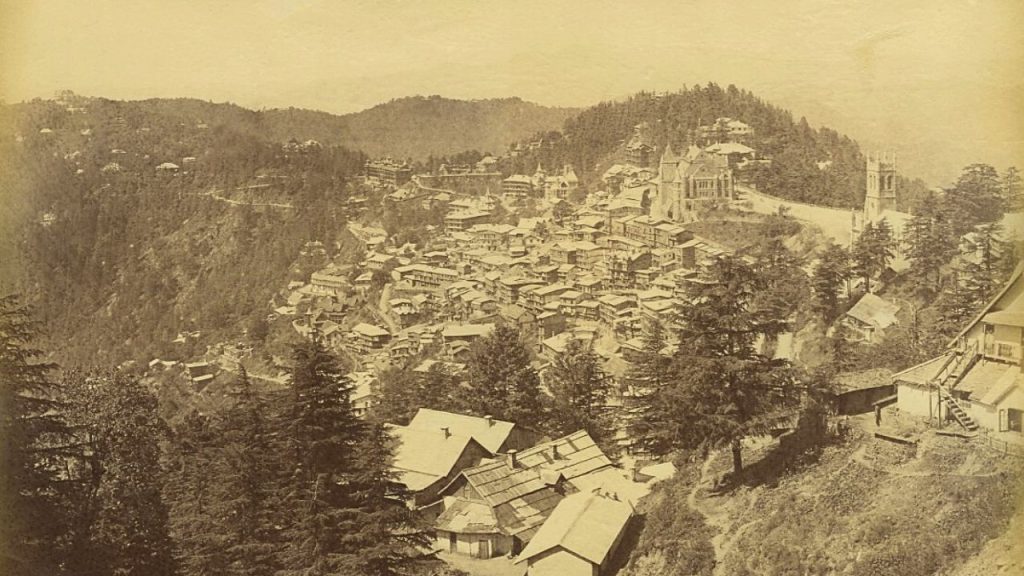
The Himachal State Museum came into existence as a direct effort to preserve and showcase the region’s cultural heritage following India’s independence. Its history is deeply intertwined with the Inverarm building, a Victorian mansion that it now occupies.
From Colonial Residence to State Museum
The story of the museum’s creation can be traced through several key phases:
- Colonial origins: The building was originally constructed as a small mud-roofed house in the early 1860s and was later expanded into a Victorian mansion known as “Inverarm”. During the British Raj, it served as the private residence for high-ranking military and government officials, The Victorian building was the residence of Lord William Beresford, who was the Military Secretary to Lord William Bentick, who served as Governor-General of India. After he left, Sir Edwin Colonel was the next resident of the building and then it was inherited by the finance member of the council, Sir Edward Law. Until India’s independence, the building was used as the private residence of the government officials.
- Government acquisition: After India’s independence, the mansion housed various Indian government officials.
- Conversion to a museum: Recognizing the need to collect and protect the state’s historical artifacts, the Himachal Pradesh government acquired the Inverarm building in 1973.
- Official inauguration: Following careful alterations to adapt the historic building for public exhibition, the Himachal State Museum was officially inaugurated on January 26, 1974, by the then-governor, S. Chakravarti.
The Purpose of its Establishment
- Preservation of cultural wealth: It was a crucial step toward protecting the ancient historical, artistic, and archaeological heritage of Himachal Pradesh, much of which was scattered or at risk of being lost.
- Showcasing Himachali culture: The museum was intended to exhibit the unique and diverse cultural history of the state, including its art, lifestyle, and traditions, to a wider audience.
- Educational institution: It was designed to function as an educational center for both locals and tourists, providing insight into the region’s rich and long-standing cultural past.
Explore Floors of Himachal State Museum
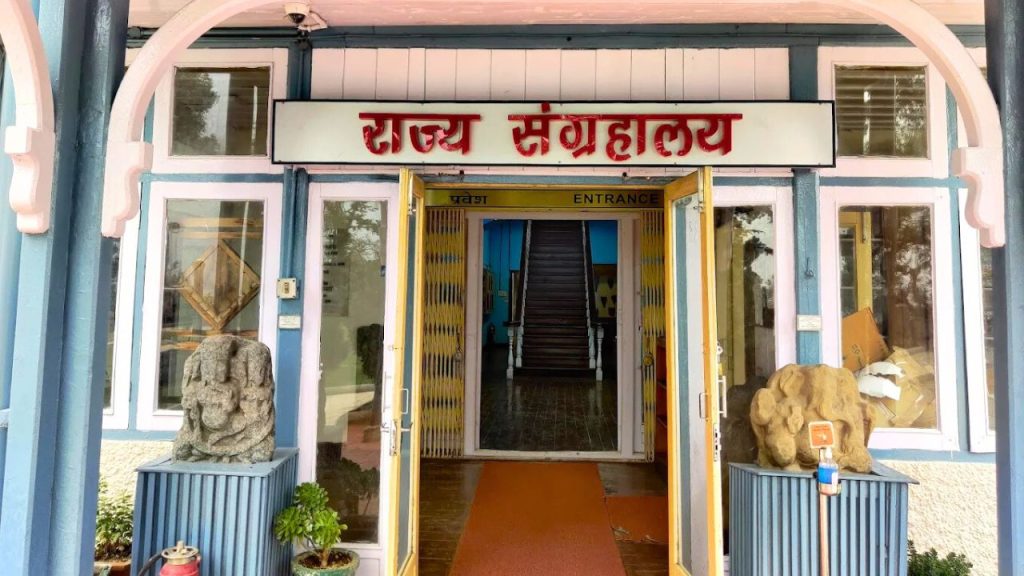
Ground Floor
Sculpture Gallery
The Himachal State Museum, Shimla, has an impressive collection of sculptures in metal, stone, and wood. These sculptures depict the religious beliefs of the people of that era and also reflect the traditions and social practices of particular time periods. While there are a few collections dating back to the 5th–6th century AD, the majority belong to later periods. Many sculptures are from the time when the Gurjaras and Pratiharas ruled the hill regions of Himachal Pradesh.
Himachal Archaeology Gallery
The Himachal Archaeology Gallery showcases a fascinating collection of archaeological relics and materials unearthed during various explorations and excavations. The displays offer visitors an insight into the early burial culture of the high mountain regions of Himachal, along with remarkable specimens of rock art from Spiti. The gallery also presents an array of ancient artifacts, including bricks, shells, beads, and Paleolithic stone tools, reflecting the region’s long and rich archaeological heritage.
Anthropology Collection
The Anthropology Collection of the museum offers a vivid portrayal of the cultural evolution of Himachal Pradesh. The exhibits come not only from regions such as Spiti, Bharmaur, Kinnaur, and Pangi, but also from neighboring areas of Haryana, Punjab, Uttar Pradesh, and Jammu & Kashmir.
This gallery features an extensive range of objects, including traditional dresses, jewelry, and musical instruments. Intricately carved wooden artifacts and beautifully woven items such as shawls, caps, and garments highlight the rich craftsmanship, traditions, and lifestyles of the people of Himachal and its adjoining regions.
Jewellery Gallery
The Jewellery Gallery celebrates the timeless charm of ornaments, which have always held a special place in women’s lives. In Himachal Pradesh, traditional jewellery was historically crafted in silver, reflecting both cultural identity and regional artistry. Over time, changing social and economic conditions led to the gradual replacement of silver with lighter, intricately designed gold ornaments. Yet, silver jewellery continues to remain significant, particularly in rural areas.
One of the most striking traditions is the use of heavy silver ornaments, sometimes weighing over 8 kilograms, worn by women during fairs, festivals, and weddings as a mark of beauty and status.
This gallery provides visitors with a comprehensive insight into the region’s traditional adornments, showcasing jewellery for the head, forehead, ears, nose, neck, breasts, arms, wrists, fingers, ankles, feet, and toes each piece reflecting the deep cultural roots and artistic expression of Himachal.
Numismatic Gallery
The Numismatic Gallery offers a fascinating glimpse into the social, political, and economic life of different eras through its rare coin collection. Among the highlights are punch-marked coins from the Maurya period discovered in the Arki and Kangra regions, as well as Indo-Greek coins from Una, Chamba, Kangra, Mandi, and Hamirpur. Many of these coins bear inscriptions that shed light on the rulers and cultures of their time.
The gallery also preserves coins once circulated by tribal communities of Himachal Pradesh, alongside pieces from the Mughal, Sikh, and Indo-Sassanian periods, making it a rich source of historical and cultural insight.
Local Deity Gallery
Himachal Pradesh, often called Dev Bhoomi – The Land of Gods, is home to countless local deities that embody the region’s spiritual and cultural heritage. Beyond its snowy peaks and natural beauty, Himachal has a deep tradition of worshiping Devis and Devatas, seen as manifestations of the one Supreme Being.
Each village reveres its own Ishta Devata (personal deity), serving as the spiritual center of community life. Through rituals like puja, devotees express love and devotion, inviting their deities as honored guests. This gallery reflects the age-old religious beliefs, art, architecture, and practices that continue to shape the cultural identity of Himachal.
Chamba Wall Painting Gallery
The museum houses a select collection of 18th–19th century wall paintings from the Rang Mahal in Chamba. These works are notable for their expressive linear quality, where lines flow seamlessly across the panels. Executed in fresco technique with tempera finishing, the paintings convey a calm and serene atmosphere despite dynamic compositions.
Themes reflect both religious and social life of the time, illustrating episodes from the loves of Krishna and Radha, legends of nayakas and nayikas, and the Rasa Mandala. One striking composition depicts Krishna playfully chasing the gopis, catching Radha, and spilling the butter pots they carry—a vivid glimpse into the cultural life of that period.
Wooden Gallery
Wood has been central to Himachal’s architectural and sculptural art since ancient times, valued for its smooth texture and flexibility that allowed carvers to create diverse artistic forms. The museum preserves a rare specimen from the 8th century, a panel from the Markula Devi Temple, Udaipur, depicting Durga as Mahishasuramardini, modeled after the famous Lakshna Devi image of Bharmour.
Other remarkable pieces include folk-style carvings of Shiva and Parvati from Duttnagar, portrayed in village attire – Shiva with a skull cap astride his Nandi resembling a pony, and Parvati in a wheel skirt with folded hands. A bass relief panel of two peacocks facing each other beneath a blooming tree and the square wooden pillars from Chaupal, adorned with the ghatpallava motif transformed into a nectar pot guarded by four birds, further highlight local craftsmanship.
The gallery also displays 17th–18th century ritual masks from Duttnagar. These masks, used in dances and dramas, embody village beliefs and symbolize the eternal theme of the victory of good over evil or the arrival of spring after harsh winter.
First Floor
Bronze Gallery
The North-Western Himalayas once had large images of Brahmanical and Buddhist deities in gold, silver, and other metals, but most were destroyed by iconoclasts. Their absence enhances the importance of Himachal Pradesh’s surviving bronzes, preserved in remote regions like Bhimakali, Hatkoti, Bharmour, and Chatrari. Though the museum’s collection mainly comprises smaller bronzes, they display the same artistic excellence and classical grace as the life-size idols still enshrined in temples. Many were created using the cire-perdu (lost-wax process) and are cast in ashtadhatu (a sacred alloy of eight metals).
Himachal bronzes fall into two traditions:
Classical (up to the 12th–13th centuries): Influenced by Pratihara, Kashmiri, and Katyuri workmanship, marked by refined proportions and elegance.
Folk tradition: Characterized by angular bodies, weak torsos, ribbed necks, and disproportionately large heads with almond-shaped eyes. Popular folk bronzes often depict Mahishasuramardini, showing Durga in a village skirt, with the lion and buffalo in reduced sizes.
The collection also includes Buddha images from Himachal’s borderlands near Western Tibet, such as Rampur Bushahr, where Vajrayana Buddhism thrived. These bronzes are distinguished by their three-pointed crowns, broad plain nimbus, and flowing streamers. With no skilled artisans of its own in the 10th–11th centuries, Western Tibet relied on craftsmen from Himachal and Kashmir.
Another unique category is the mohras (masks)—local representations of Shiva, Parvati, and regional deities like devis, rishis, and nagas. Early mohras, cast before the 17th century, feature stylized faces with smiling lips, large eyes, and bird-like noses, sometimes extending to a simplified chest. Later examples were crafted from embossed copper, silver, or even gold sheets.
Army Gallery
The Army Gallery displays a rare collection of traditional arms, including axes, bows and arrows, swords, shields, pistols, and guns. Visitors can trace the evolution of weaponry in India through unique exhibits like the Zezail (long-barreled gun), old muzzle-loaders, and antique pistols. This gallery not only highlights the craftsmanship of ancient arms but also offers a glimpse into the martial heritage of Himachal Pradesh.
Freedom Movement Gallery
The Freedom Movement Gallery at the Himachal State Museum, Shimla, showcases the inspiring journey of India’s independence struggle and the role played by Himachal Pradesh in it.
Rare Collections
The gallery features photographs, documents, letters, and newspapers that bring alive the sacrifices of freedom fighters.
Local Heroes
It highlights the contributions of Himachali revolutionaries whose efforts are often overlooked in mainstream history.
A Walk Through History
Visitors can experience the spirit of patriotism and witness how the hill states contributed to the national freedom movement.
Mahatma Gandhi Gallery
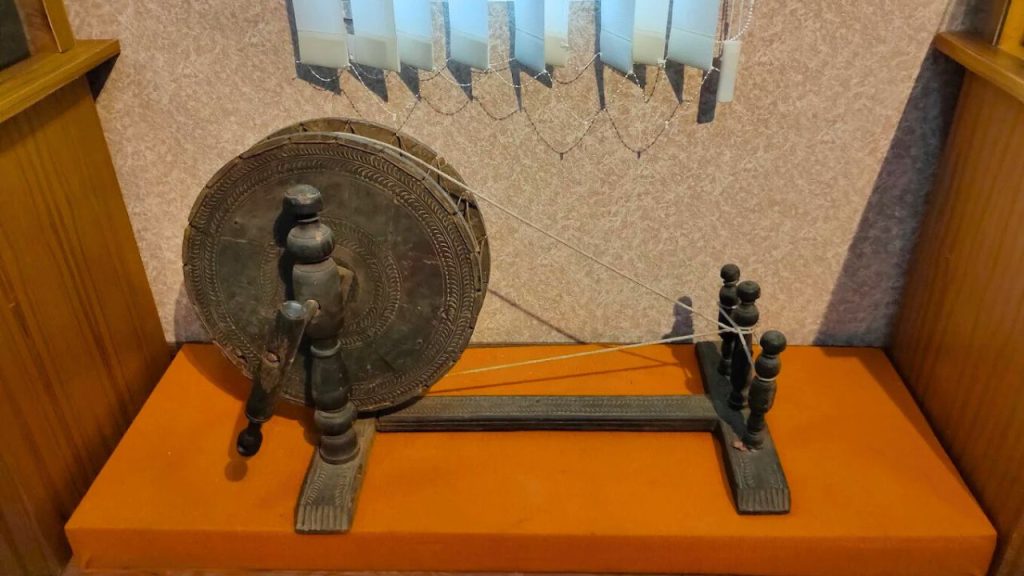
The Mahatma Gandhi Gallery at the Himachal State Museum, Shimla, is a tribute to the Father of the Nation and his invaluable role in India’s independence struggle. This gallery preserves rare photographs, personal letters, and memorabilia related to Gandhi’s life, philosophy, and his visits to the hill states.
Rare Collections
The gallery showcases images of Gandhi’s meetings with national leaders, his correspondence, and items connected to the freedom movement. These exhibits highlight his simple lifestyle, strong ideals, and the power of non-violence that changed the course of history.
Himachal Connection
The gallery also sheds light on Gandhi’s influence in the region, inspiring local people and leaders to join the national movement for independence.
A Must-Visit Section
For students, researchers, and history enthusiasts, the Mahatma Gandhi Gallery offers an insightful look into the life of a leader whose vision continues to inspire generations. It is a reminder of Gandhi’s lasting legacy in India’s struggle for freedom and social justice.
Contemporary Art Section
The Contemporary Art Section of the Himachal State Museum may be small, but it features works by some of India’s most celebrated artists. The collection includes paintings by Ram Kumar, Swaminathan, Sheila Brunner, Nilima Sheikh, Banni Prasado, Krishen Khanna, Vivan Sundaram, Sarabjit Singh, Malkiyat Singh, D.K. Chopra, Him Chatterjee, Surjeet Singh, Samuel Masih, Sukh Das, and Prabhinder Lal, along with contributions from other noted regional and national painters.
This section highlights the diversity and creativity of modern Indian art, offering visitors a refreshing contrast to the museum’s ancient and classical collections. For art lovers, it provides an opportunity to appreciate the evolving styles, themes, and expressions of 20th and 21st-century Indian artists.
Pahari Painting Gallery
The Pahari Painting Gallery at the Himachal State Museum holds a remarkable collection of miniature paintings, especially from the Pahari schools, built up within just a few decades. This collection today occupies a place of pride on the global art map for its richness and variety.
Distinct Style of Pahari Miniatures
Pahari paintings are easily distinguishable from other Indian miniature traditions. Unlike Mughal miniatures, they stand out for their brilliance of color and delicate decorative details. Compared to Rajasthani paintings, they are known for their lyrical quality and romantic atmosphere, reflecting the natural beauty of the hills.
Flourishing Schools in the Himalayas
These schools thrived in the hill states of the Western Himalayas from the 17th to 19th centuries, with some works dating back as early as the 16th century. Painted on handmade Sialkoti paper with natural colors, they represent schools such as Basohli, Guler, Kangra, Bilaspur, Mandi, and Chamba.
Themes and Inspirations
The paintings explore timeless themes drawn from sacred and literary texts like the Epics, Puranas, Gita-Govinda, Bihari-Satsai, Baramasa, Ragmala, and Devi Mahatamya. Of particular note is the Devi Mahatamya series, dating to the 16th century, which shows that artistic activity continued in Himachal even during what is often called a “dark period” in its art history.
Artistic Brilliance
Created in the Charu-panchsikha style, these works display the same fondness for intricate details, smooth brushwork, and delicate lines that later flourished fully in the masterpieces of legendary artists like Manku and Nainsukh.
Children Section
The Children Section of the Himachal State Museum, Shimla, is designed to engage young visitors with history, culture, and art in a simple and interactive way. This section features toys, puzzles, story-based exhibits, and learning materials that make museum visits both fun and educational for children.
It introduces kids to the rich heritage of Himachal Pradesh through colorful displays and creative activities, sparking their curiosity about the past. By blending education with entertainment, the Children Section ensures that even the youngest visitors develop an interest in museums, culture, and history.
Philately Section
The Philately Section of the Himachal State Museum showcases a fascinating collection of stamps, first-day covers, and postal memorabilia from India and around the world. Visitors can explore the history of communication, design, and culture through these miniature works of art.
This section not only highlights the evolution of postal services but also offers stamp enthusiasts and casual visitors a unique way to connect with history and heritage.
Second Floor
Conference Hall
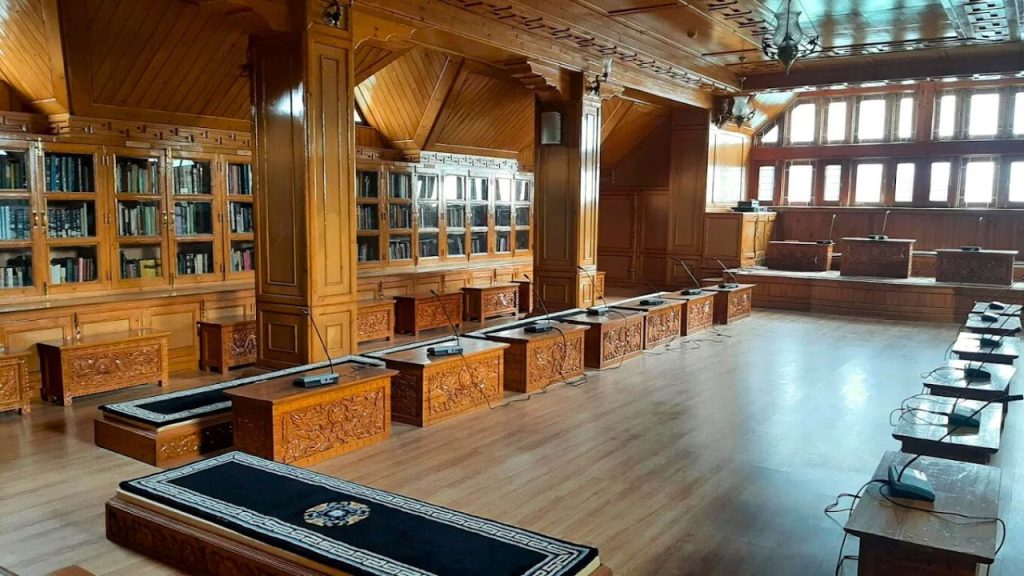
The Conference Hall at the Himachal State Museum, Shimla, is a modern space designed for seminars, workshops, cultural programs, and educational events. Equipped with comfortable seating and audio-visual facilities, it provides an ideal venue for research discussions, art exhibitions, and heritage-related activities.
This hall not only supports academic and cultural engagement but also encourages visitors, students, and scholars to interact, learn, and celebrate Himachal Pradesh’s rich history and art.
Library cum Conference
The Library cum Conference section of the Himachal State Museum combines knowledge and collaboration in one space. The library houses a rich collection of books, journals, and research material on Himachal Pradesh’s art, culture, history, and heritage, making it a valuable resource for students, scholars, and enthusiasts.
Best Time to Visit
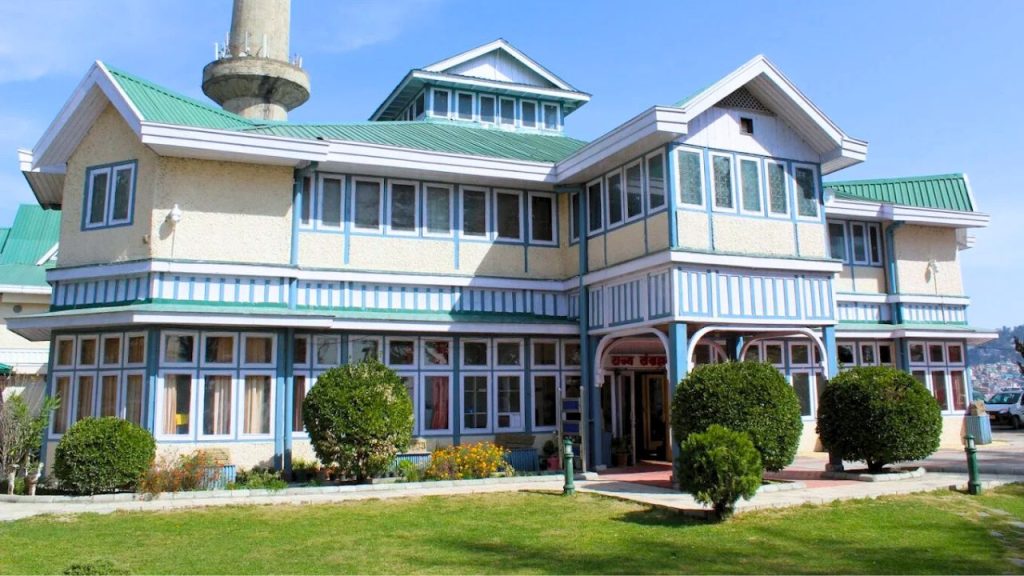
The best time to visit the Himachal State Museum is March to June and September to November, when Shimla’s weather is pleasant for sightseeing. Winters are cold but also offer a quieter experience with fewer crowds.
Entry Fee
- Adults: ₹50
- Foreigners: ₹150
- Children: ₹30
Location
The museum is located on Chaura Maidan, Shimla.
Opening Time
- Open: 10:00 AM – 5:00 PM
- Lunch Break: 1:30 PM – 2:00 PM
Holidays
Closed on Mondays and public holidays.
How to Reach
- By Air: The nearest airport is Jubbarhatti (22 km from Shimla).
- By Rail: Shimla is connected by the Kalka–Shimla narrow-gauge railway.
- By Road: Taxis and local buses connect the museum easily from Shimla town.
Conclusion
The Himachal State Museum is not just a building filled with artifacts, it is a living archive of the state’s glorious past, vibrant traditions, and artistic excellence. From ancient sculptures and Pahari paintings to rare manuscripts, coins, and cultural exhibits, the museum offers visitors a deep dive into Himachal’s heritage. For history lovers, art enthusiasts, and curious travelers alike, it serves as a gateway to understanding the soul of the Himalayas. A visit here is truly a journey through time, preserving the cultural identity of Himachal for generations to come.

